
This article is reproduced from the Australian Railway Enthusiast Magazine, Winter 2019
STOPOVER IN TRINIDAD
In 1964, after three years in Adelaide, my father was transferred to Lagos in Nigeria. Taking the ‘Overland’ to Melbourne we sailed on the wonderful P&O Liner “Canberra” to England. One day Railway Station stops were made in Perth ( East Perth and Midland ) and Ceylon ( Sri Lanka ). In Aden I bought my first slide camera – a Yashica Minister – and cheap film, the result of four weeks hard work fencing on a friend’s farm. Alexandria had a great tram network, while Naples was all electric and diesel.
Three months leave in UK including many loco sheds – one of the final years of British steam – then a change of plan and we were transferred to Jamaica. Excellent for me as I could finish school there, rather than boarding in UK.
We sailed to Jamaica on the Fyffes Line ship “Camito”. At only 8500 tons she rolled heavily across the Atlantic, emptying the swimming pool on several occasions. The ‘Camito’ sailed around Jamaica loading bananas before returning to the UK.
We stopped over for the day at Port of Spain, the Capital of Trinidad in the Eastern Caribbean. The ship filled up with bunker oil here. Trinidad was captured by the British in 1797 and became a British Colony until Independence in 1962. The island is only 15km from Venezuela.

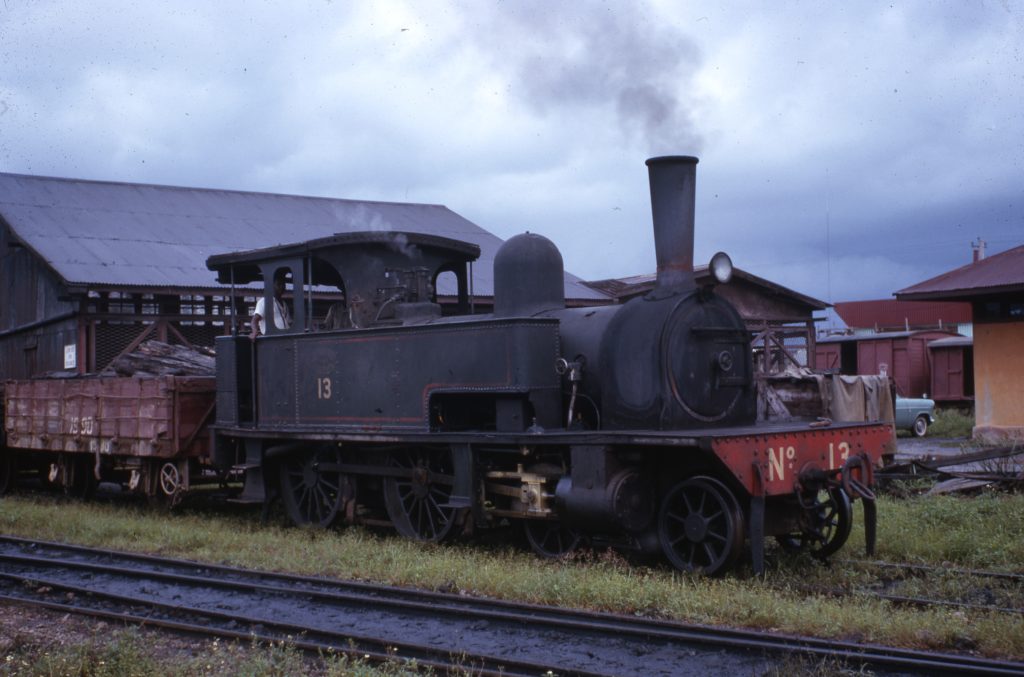
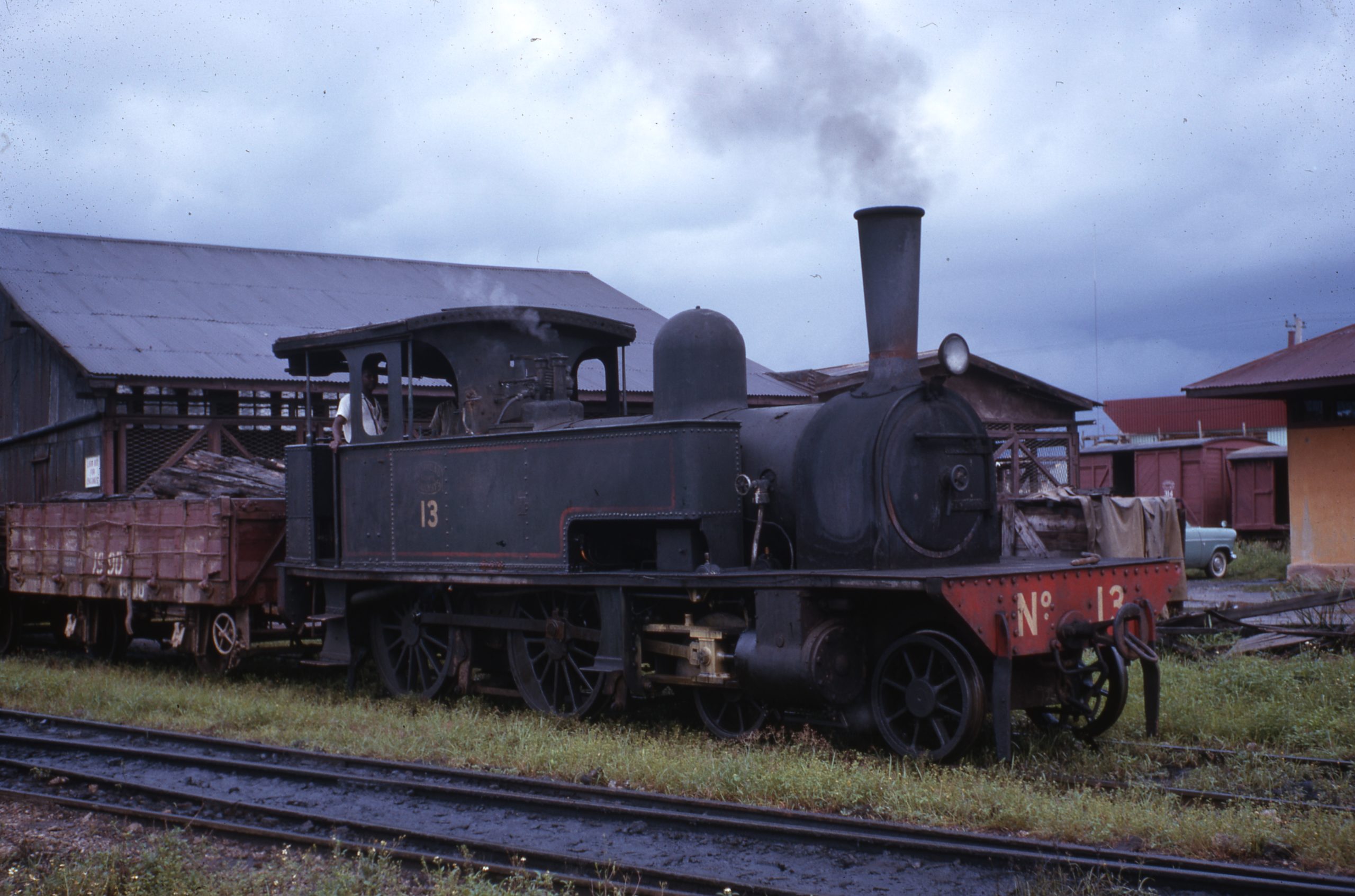
Needless to say, I made for the Railway Station. There was a local commuter service hauled by Montreal Loco Company 1920 built 4-6-0s and a very old Kitson 4-4-0 tank shunting. Carriages had a distinct US flavour. There were three Montreal Loco 2-8-0s for freight work. The TGR also experimented with steam railcars in 1910 and 1931 and ex-British Railways Multiple Units were in use at the time of my visit.

During World War 2 the US Army brought some of their GE Diesels and a number were purchased after the war for the commuter service, a task which proved beyond them.

Friendly staff at the depot were happy for me to wander about.

The Trinidad Government Railway started in 1876 and eventually the standard gauge system with three branches, covered 170 route kilometres. A Government report in 1964 recommended closing the system and using buses and the whole railway closed in 1968. Some Sugar Mills used sections of the track until 1998.

An interesting 2-6-2 Tank Loco “Picton” built in 1927 for United Sugar Mills has been rescued, shipped to England and is now being restored at the Middleton railway in Leeds.
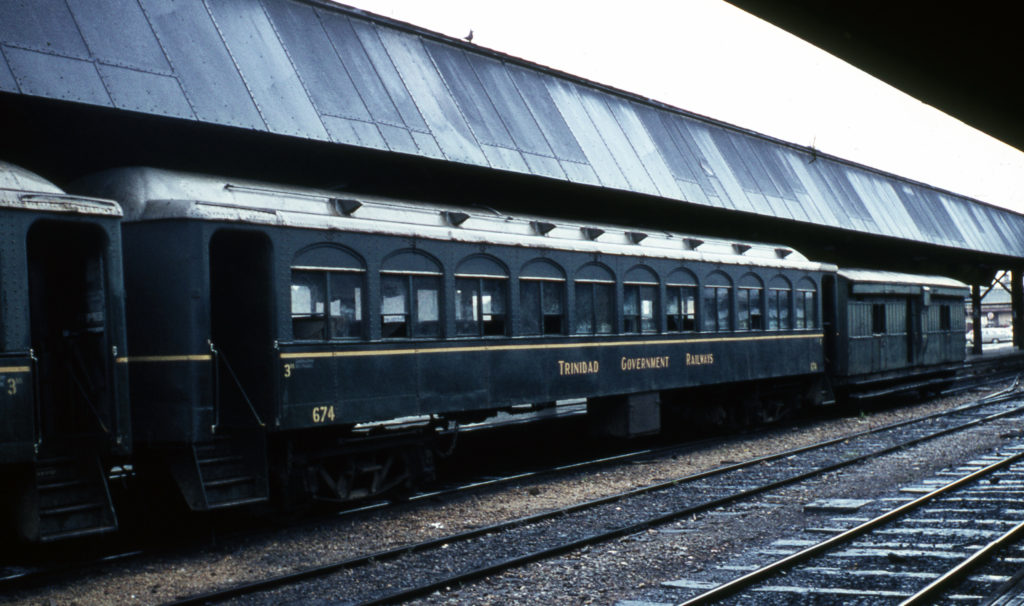
Two small locos have been plinthed in Trinidad, while the main station is now the bus terminus. Roads have become so clogged that the Government is now talking of building a railway!
Jeremy Browne
March 2019