
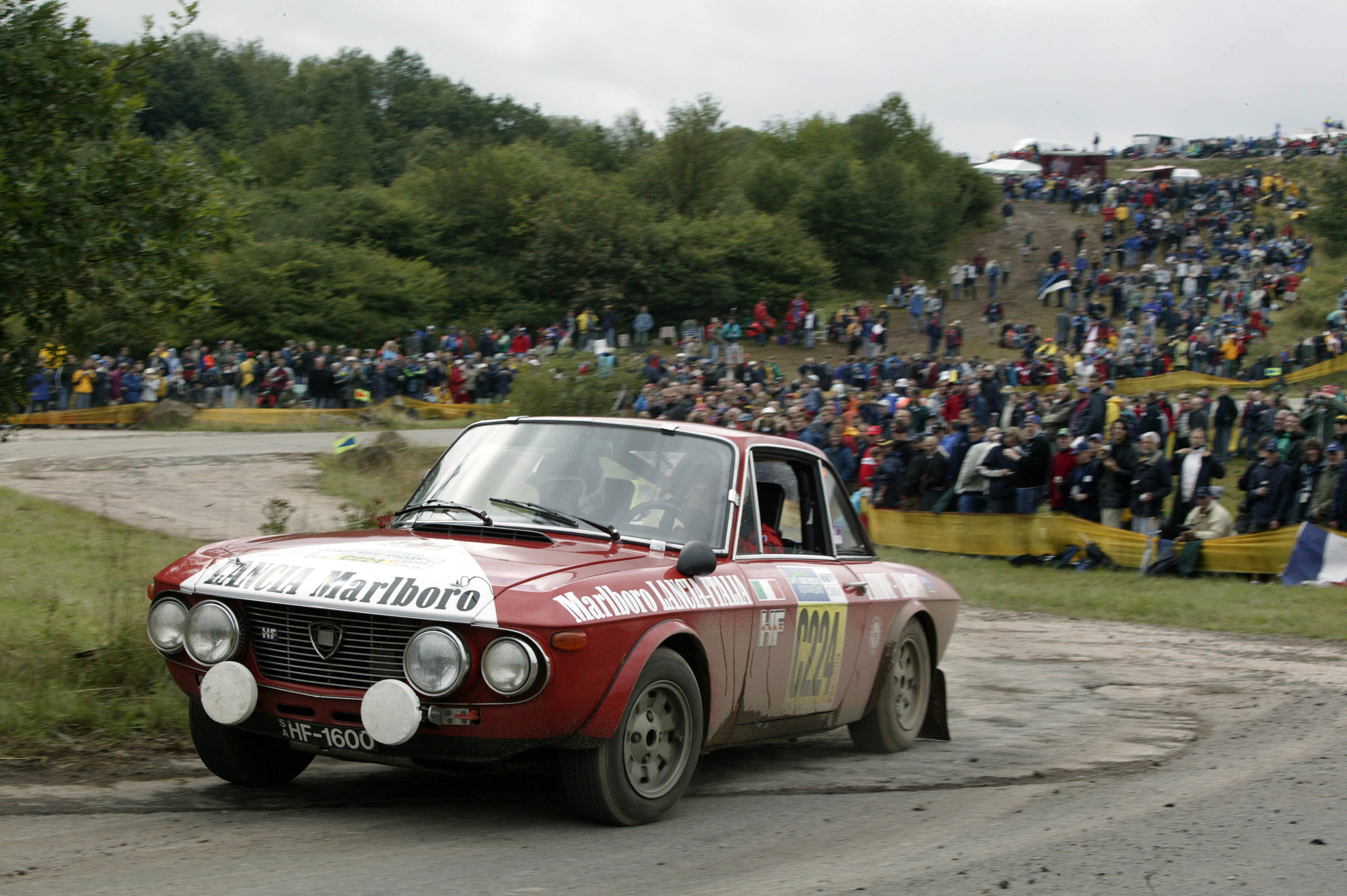
Over the last ten years Jeremy Browne from Adelaide has been busy flying the Lancia flag in Australian Tarmac Rallies. Using two Fulvia 1.6 HF – “Maria” a 1969 car previously owned by Lou Brittain and “Olivia”, an ex-works Team Car first used in 1972, he has achieved outright victory in Targa Tasmania Classic, Repco Mountain Rally and Rallye de Bordeaux, with Class wins at Rally Tasmania and Classic Adelaide.
Recently Jeremy has been fulfilling a long term dream by competing in selected European Rallies.
After a number of years competing in serious tarmac rallies in Australia it was time to try something new. I had always wanted to compete in some of the famous European events and with the big increase in costs competing in Australia it appeared that we could do some similar events in Europe for a similar cost. And have a holiday at the same time.
Seven years of Directing major rallies had convinced me that competing was far more rewarding and much cheaper!
Priority one was the San Remo Historic Rally in Italy. 2002 marked thirty years since Lancia had won the rally and the World Championship with the Fulvia. My car had come second in the 1972 San Remo with Barbasio driving for the Lancia team, so our trip to San Remo was a real pilgrimage.
In August 2004 the chance came through a friend to join legendary rally photographer Reinhard Klein’s “Slowly Sideways” group at Rallye Deutschland, a round of the World Championship. The rally is based at Trier in south-west Germany.
With the help of some good friends and two long nights we built up another engine using a spare block and swapping cams and heads around. This time we used a pair of Dellortos rather than the usual Webers, as we could not get the manifold off the damaged head. Finally it was ready to start. No go – the starter would not engage. Oops, we had left the series 1 flywheel on. Engine out, change flywheel and try again. This time it burst into life and felt strong as we did a 20km test run at 5am. Back to the shed, load the spares and off to the shipping agent to strap it into the container.
A real stumbling block was turning out to be insurance. No Australian company would cover the car, even for Third Party. This was awkward, as because the car is registered in Australia no company in Europe would cover it either. We had really hoped an Aussie “enthusiasts” company could arrange cover, but no. Eventually after almost giving up, we found a company in England that provided comprehensive cover and recovery from Europe.
We picked the car up at Tilbury docks near London and set off driving to Germany, via a close friend’s wedding in the north of France. It took a while to recover from the wedding, then we drove off to Germany via Belgium, stopping over-night at Bastogne, famous from the Battle of the Bulge in 1944.
This time the car had a 4.6 final drive, so cruising at 110 km/h was OK, if a bit noisy.
We joined the Slowly Sideways group near Kusel in beautiful country. Lancia were well represented with Fulvia, Stratos, 037 and Integrale. All lovely rally cars. There were 30 Historic Rally cars in all, from a Ford Anglia, Two stroke Saab and belt driven DAF to
Peugeot 205T16, Audi Quattro and Metro 6R4. “Slowly Sideways” is a group of enthusiasts who own historic rally cars too valuable to compete with, or ineligible under current rules, but who still want to drive them quickly. They display the cars at various events. Big benefits are not needing all the competition paraphernalia such as licences, medicals and paying only a nominal entry fee. Full safety gear is required and the cars must be rally ready.
Rallye Deutschland has 24 stages over three days. They are all tarmac, although many were covered with mud and gravel where the WRC cars had cut the corners, while Day 2 is mostly on a tank training area where the tarmac is not exactly pristine. We were not covering all the stages, but most of them once.
At the last minute we were unable to recce the stages, so we had to make do with a set of German pace notes. Working late into the night these were re-written into my number system. Corners are graded 1-10 with ten the fastest. They worked reasonable well, though having not checked them it was not possible to commit as normal.
We ran the stages after the first pass of the WRC cars. There were massive crowds – estimated at 200,000 and the old rally cars were well received – even down to Italian flags waving. The Group B cars are certainly the favorites and it is fantastic that today’s fans can see – and hear – the spectacular cars of twenty and thirty years ago.
The stages were physically very demanding, with many narrow corners, even hairpins linked by quick straights. My shoulders were aching by the end of the day.
In the main Service Park we were only metres from the Peugeot and Citroen camps, with drivers like Carlos Sainz and Sebastien Loeb walking past. It was a great environment.
We were using the same Avon tyres from San Remo, though this time with the correct pressure. They worked well on the wet tarmac and mud, at least well enough to pass a Porsche or two. We were not competing, but encouraged to drive as fast as we felt comfortable. If you crash though, make sure you go right off the course! As it turned out we were timed on all the stages, so we could see how much slower than the WRC cars we were.
One of the features was the famous “Red Bull” jump on the Panzerplatte Stage. I had forgotten about it when co-driver Diana said “what’s the big arch for !” I am not sure how long we were airborne, but the flight attendant did come round with drinks.
No problems with the car or the stand-in motor, running happier with 100 octane unleaded from the pump in Germany and a tank-full of 100 octane leaded available at selected garages in England.
We drove back to England and put the car into de-humidified storage at Swindon, west of London. Although expensive, it is well worth not worrying about security and weather.
Next event, in April this year was in Ireland. Killarney’s “Rally of the Lakes” is one of the biggest tarmac rallies in Ireland and “Slowly Sideways” UK section was involved. After my experiences in Germany I would loved to have competed properly in Ireland, but that meant organizing International licences, service crews etc. and the Historic event was only one day and half the stages, while “Slowly Sideways” did the full sixteen stages.
I picked the car up at Swindon, where the storage owner was busy restoring an Aurelia B20, and spent the day checking it over. New tyres were ordered from Avon, oil and filter changed and brake pads replaced. Oops, a cracked disc. Quick phone calls produced new vented discs delivered the next morning – thrown in the car and changed in Ireland.
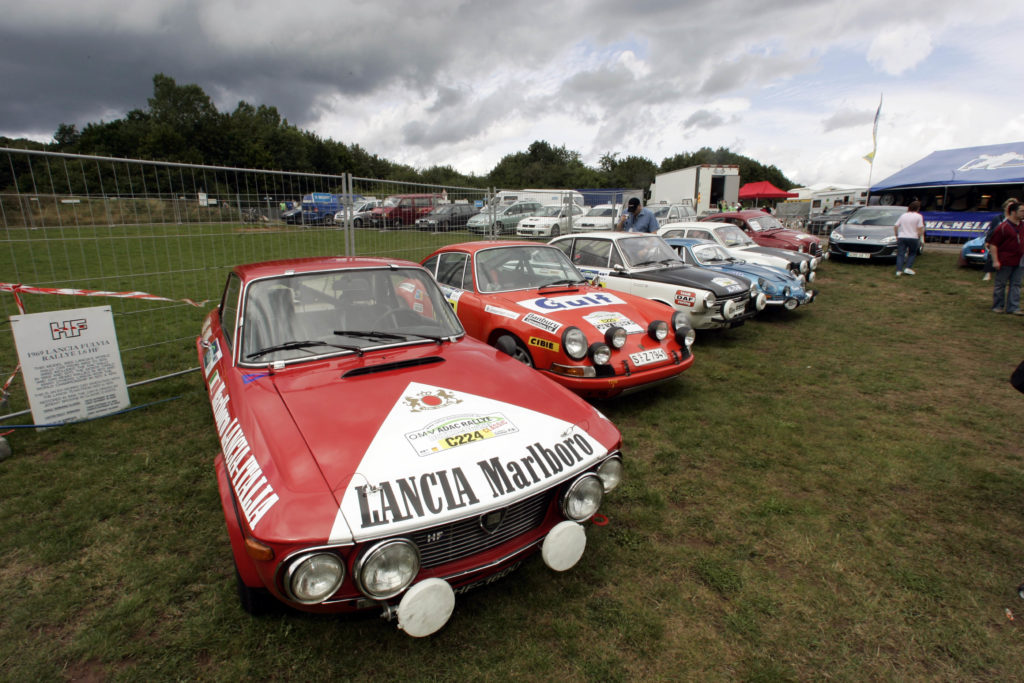
It was a five hour drive to Fishguard to catch the ferry across the Irish sea, this time just myself and a car full of gear. The ferry crossing was smooth and I then set off on the four hour drive to Killarney. The map showed the direct road through Lismore and it was signed that way. This turned out to be a bad choice on a narrow road in the rain with plenty of traffic.
The organizers had helped me to find a local co-driver and Bob Kelly turned out to be a capable co-driver ( it is rumoured to be hard to co-drive for a co-driver ) and a good fun companion. We spent 2 ½ days driving the stages in steady rain, making our pace notes. They were mainly narrow tarmac roads, even with grass in the middle between high banks and hedges and very bumpy. I was concerned that “Olivia” would take quite a beating and we only had an aluminium sumpguard, rather than the big steel works guard.
In all there were eight different stages with exciting names such as “Beallaghbeama”, “Gortnagane” and the famous “Molls Gap”. Stages were between 15 km and 22 km long. Some of the stages were used in the famous Circuit of Ireland Rally. There were 16 stages in all, totaling 292 km competitive, so it was quite a big event.
We spent the first evening fitting new brake discs and jacking up the front suspension for the bumpy roads. New rubbers were fitted to the front springs and an 8mm spacer fitted.
This raised the car about 30mm and turned out to be perfect. The Koni shock absorbers were also screwed up to a harder setting.
The Irish take their rallying very seriously and there were 250 cars in the International Irish Tarmac Championship event, Historics and Juniors. The first 22 cars were privately owned World Rally Cars, including 2005 specification cars. There were even helicopters for leading teams. Colin McRae was driving his six speed sequential gearbox Ford Escort Mark 2 as course zero car and attracting a big crowd.
The “Slowly Sideways” cars ran first, so on some stages we caught up with the course cars. Spectators were a problem on some stages, certainly not the rigourous standards imposed in Australia. That’s why rally fans go overseas to spectate. It was rainy and misty most of the time and the roads were very slippery. I had new Avons delivered to Ireland and was very impressed how they performed. Driving standards were very high as witnessed by how few accidents there were and the clean condition of the stages on the second pass. If that had been Targa, there would have been debris everywhere.
One interesting local feature was big signs saying “THINK” . I asked Bob what they were for – only to be told they were caution signs. “Tink of the consequences if you are stupid! “
Bob called the notes well and the gearing and ride height were just about perfect. The only worry was that having been told 98 octane was available we could only get 95. Even with lots of additive I was worried that it would harm the engine and sure enough, at the end of Day one we had a minor leaking head gasket. It survived the event OK and used no coolant on the easy seven hour drive back to England, so hopefully all that’s needed is a head gasket change, or maybe re-fitting the good engine.
On Saturday night we went downtown Killarney for a meal. The place was leaping with hundreds of young spectators and the most beautiful girls.
If you wanted to enter the competition, the entry fee was 695 Euros ( $ AUD 1150 ) . San Remo was 775 Euros. I can’t help thinking we need shorter events – in time not distance – like that here. Apart from Rally Tasmania, the other tarmac events in Australia have become very expensive just to get on the start line.
Also I have just finished my Cooper S after 32 years in the shed and we ran that for the first time at Rally Burnie in June. It is certainly different to the Fulvia and about 2 seconds a kilometre slower. The Mini is going to need another run in 2006. I loved the T shirt at Rally Burnie: “My drinking team has rally problem!”